


Back in 2010 I bought a good German Full HD satellite receiver that runs on Linux.
I put it through a lot over a long time. For almost 5 years (!) the receiver was never switched off or put into standby. Only the TV was turned off. Credit where it's due: the Germans built it well.
Then in May this year, because the room was being renovated, the receiver went into a box for 3 months.
The renovation was finished, and it was time to take the *dream box* out of the cardboard box.
I immediately did a full reset. And that's when the fun began.
After pointing at Hot Bird 13° and scanning the transponders, I was surprised to find no HD channels, even though there were about 1200 services in total. Well, I'll be! What's going on? It finds the SD channels! And they play!
I thought the image was corrupted. I reflashed from Gemini to NewNigma. Same thing.
I climbed up and replaced the LNB on the dish, thinking it had died. No luck.
Next I started entering the first HD transponder I came across (and several more) manually to see what was going on.
And here's what was happening: in DVB-S QPSK the AGC bar showed 99% and SNR 0%. Of course, this is MPEG-4. As soon as I switched to DVB-S2 8PSK, the AGC bar started twitching wildly like the level meter on a tape recorder. The same on every HD channel. Naturally, signal 0%. That was disappointing.
After a long think I came to a conclusion: the receiver had spent almost its whole life switched on and warm. The signal won't lock, there's no stability... power supply... Capacitors!!!
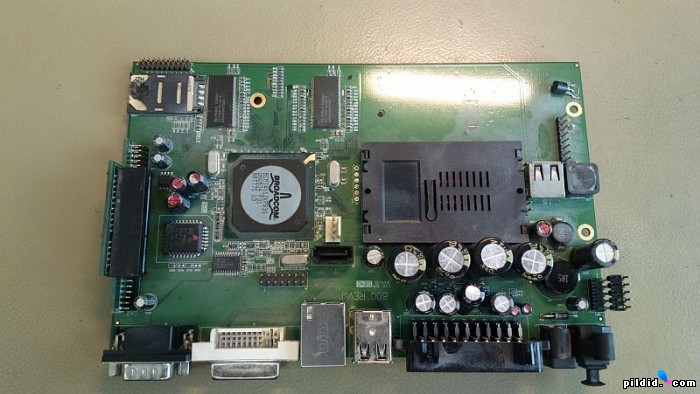
I took the thing apart and immediately found a bulging capacitor at one of the SCART pins.
I took it to work, where all the electrolytics were measured. And here is the interesting picture we got.
Everything marked in red is practically dead.
The removable tuner wasn't much better:
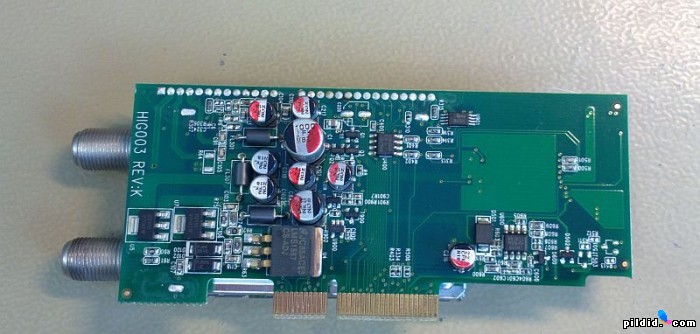
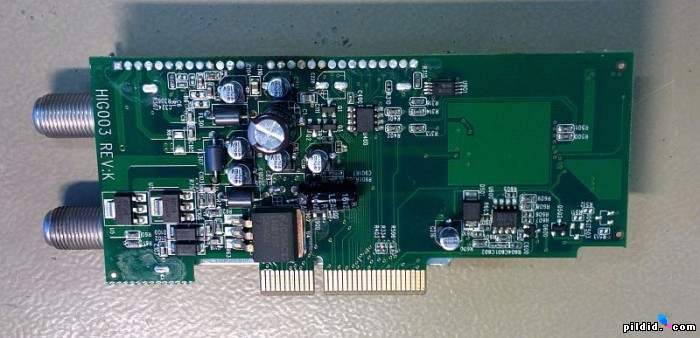
After replacing all the electrolytics, everything worked like clockwork.
I hope someone finds this article useful.
ES1ACS